
Benzene exposure can rise sharply during short activities such as handling or dispensing petrol, even when average ambient concentrations are low. This field study used the portable Kore MS-200 to measure benzene continuously in a driver’s breathing zone during vehicle refuelling.
Personal exposure to benzene is commonly assessed using adsorbent tubes worn for several hours or days and analysed later in a laboratory. These methods provide an average concentration, but they cannot show exactly when exposure occurred or how rapidly conditions changed.
This limitation is important around petrol stations, fuel-storage areas and other locations where brief concentration peaks may be much higher than the surrounding background. Exposure can also vary substantially according to wind speed, wind direction, the operator’s position and the duration of the task. Modelling an average result may therefore overlook the short-lived events that determine actual exposure.
Portable TOF mass spectrometer
For real-time mass spectral analysis
Characteristic fragment patterns
NIST library-compatible
Securely contained in peli case
Sample where and when it matters most
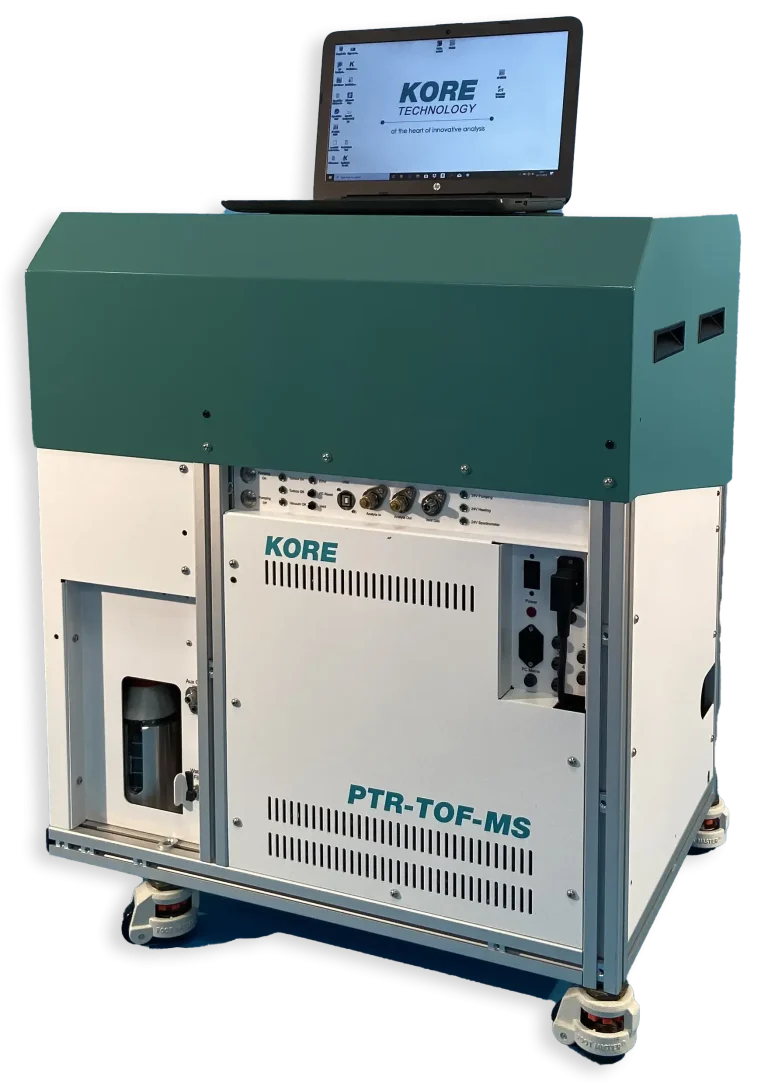
The study used the Kore MS-200, a portable, battery-powered electron ionisation time-of-flight mass spectrometer. The self-contained instrument was placed securely on the rear seat of the vehicle and operated without a separate vacuum station, mains supply or carrier-gas cylinder.
Sampled in the operator's breathing zone
Low-ppb benzene detection limits
Portable operation
Take live data, which averaging could miss
One measurement every 30 seconds
Automated acquisition and ppb calculation
Sample air was drawn through a heated inlet and membrane concentrator before analysis using 70 eV electron ionisation. EI produces a characteristic pattern of molecular and fragment ions, providing chemical specificity and compatibility with established mass-spectral libraries. The membrane inlet concentrates many volatile organic compounds and supports low-ppb detection. Before the field measurements, the MS-200 was calibrated using a 1 ppm benzene standard. A three-metre flexible PTFE tube connected the instrument to the driver’s breathing zone, allowing the driver to move naturally during refuelling. The internal sample pump transported air through the tube to the analyser.
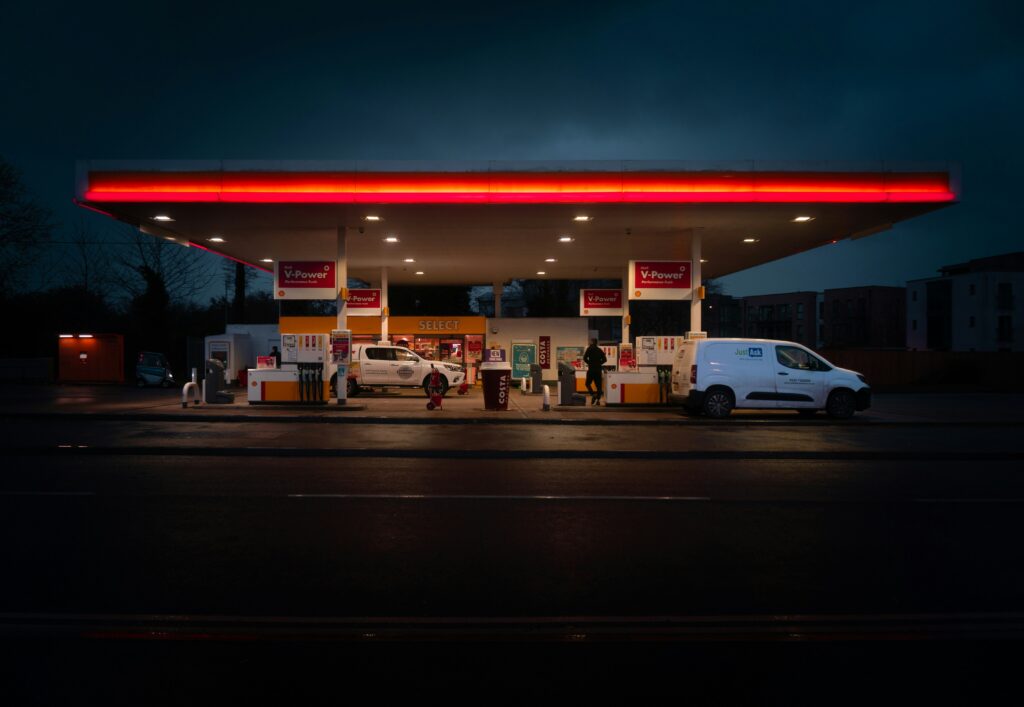
Measurements were performed on four separate days during June and July at a rural petrol station beside a major UK A-road. Each test took place around midday in temperatures of approximately 27–30°C. This configuration combined low-level benzene detection with field portability and continuous sampling. Data collection occurred automatically, without requiring the driver to operate the instrument during refuelling. After the tests, Kore’s automated processing routine converted the recorded signal into exposure concentrations using the earlier calibration.
| Measurement | Estimated wind speed (km/h) | Wind direction | Fuel pumped (litre) |
|---|---|---|---|
| 1 | 5 | S | 45 |
| 2 | 10 to 15 | N | 45 |
| 3 | 5 | S | 45 |
| 4 | 5 | S | 25 |
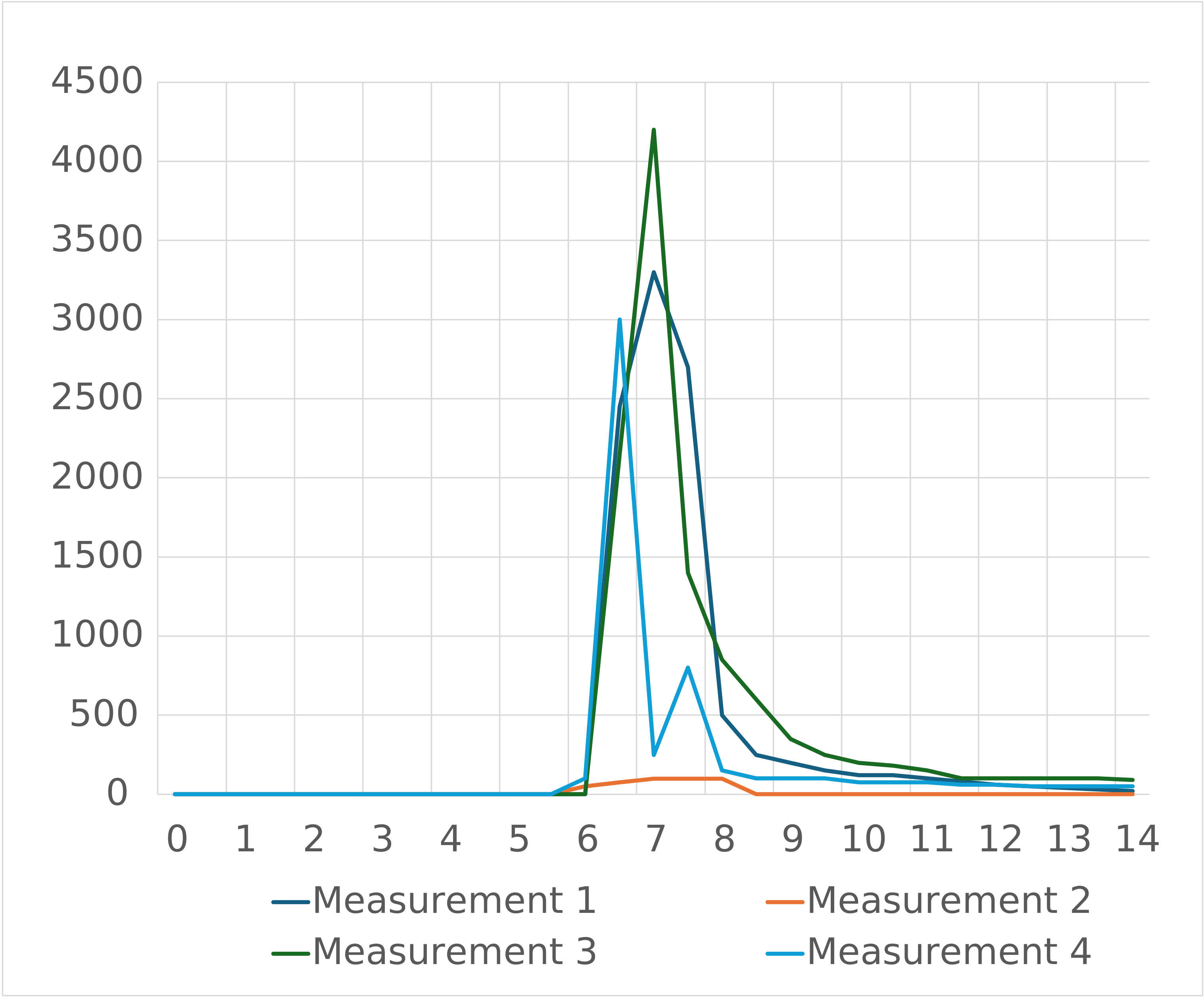
Figure 1: Benzene Plots During Four Refuelling Measurements.
Peak benzene concentration
Highly influenced by wind
2 min typical refuelling duration
In all four measurement conditions, wind speed and direction were measured. Refuelling lasted about two minutes, with either 25 or 45 litres of petrol dispensed (Table 1). One data point was collected every 30 seconds. The time-series graph (Figure 1) shows benzene concentration in the driver’s breathing zone before, during and after all four refuelling measurements. Measurements 1, 3 and 4 produced rapid concentration increases, with peak values between approximately 3 and 4.2 ppm. In Measurement 4, the concentration fell close to background during refuelling before rising again to approximately 820 ppb, demonstrating how quickly exposure can change. Measurement 2 peaked at only approximately 100 ppb, substantially below the other tests. This coincided with a higher estimated wind speed of 10–15 km/h and a different wind direction, showing that local airflow strongly influenced the driver’s exposure.
This study demonstrated the advantage of portable real-time mass spectrometry measurements to assess safety of personnel working with benzene. The Kore MS-200 gave fast, reliable mass spectral data directly from the breathing zone of the operator. This data can provide essential information on exposure peaks, which would be missed by long-term adsorbent tube methods.
Kore’s MS-200 is a portable, battery-powered electron ionisation mass spectrometer for gas analysis — entirely contained in a suitcase.
Kore MS-200 electron impact time-of-flight mass spectrometer was used for mass spectral analysis. Four refuelling measurements were taken on separate days; 25–45 litres of fuel were dispensed over approximately two minutes.
Instrument calibrated with 1 ppm benzene before field measurements.
Directly positioned in the driver’s breathing zone sampled via a 3 m PTFE line connected to the MS-200 inlet
Benzene below 5 ppb in ten seconds using the membrane inlet
Kore-customised GRAMS/AI™ software with automated processing and concentration calculation
70 eV EI; 1–1000 m/z mass range; resolution above 200 m/Δm FWHM; 23 kg; approximately six hours of analytical battery operation
Discuss your personal-exposure and real-time VOC-monitoring requirements with our technical specialists.
Dae parum ullendamet pera ipieturit esectis necae eum.
Dae parum ullendamet pera ipieturit esectis necae eum.